



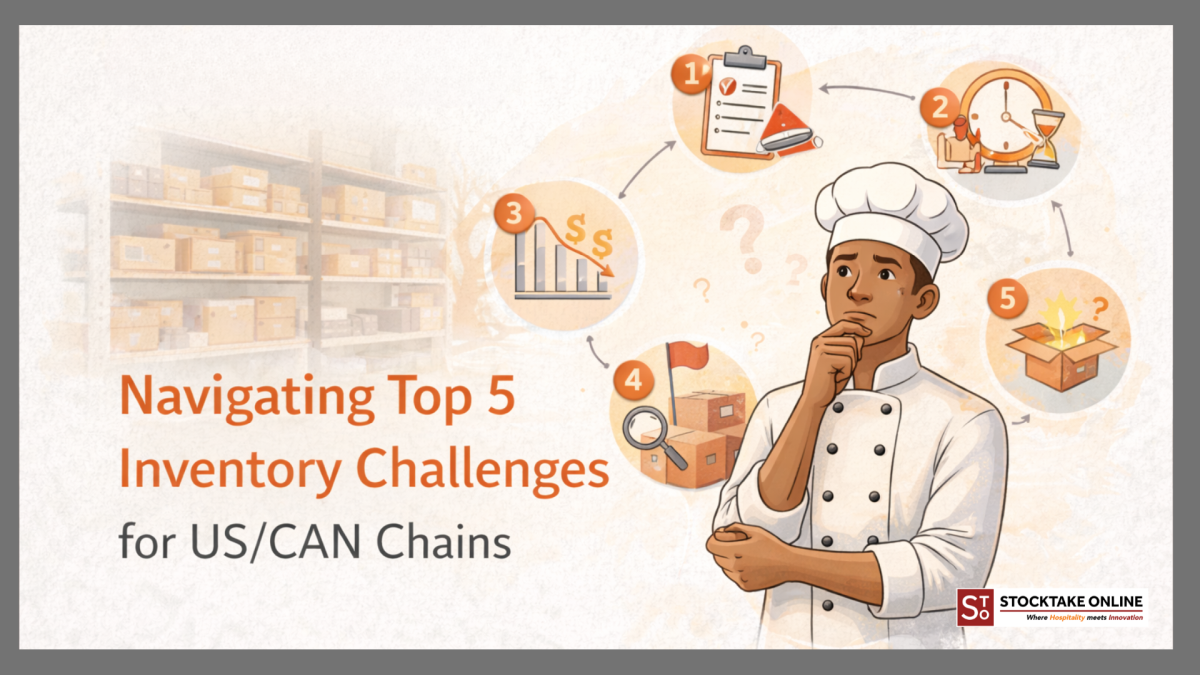
The North American hospitality landscape in 2026 is defined by thin margins and an unforgiving economic climate. For multi-unit chains across the US and Canada, the "gut-feeling" approach to inventory is no longer a viable strategy. As operational pressures mount—driven by fluctuating ingredient costs and complex supply chain logistics—operators are turning toward sophisticated stock control software to maintain financial health. This article explores the five most critical inventory challenges facing large-scale chains and how an integrated, real-time approach to back-of-house management can transform these hurdles into competitive advantages. By leveraging automation and deep analytics, brands can move beyond manual logbooks toward a future of predictive procurement and optimized profitability.
Industry & Market Context
The modern restaurant chain operates within a web of macro forces that demand extreme precision. Supply chain volatility remains a constant threat, where a delay in a single ingredient shipment can disrupt menus across hundreds of locations. Furthermore, the rise of cloud kitchens and diversified delivery models has added layers of complexity to stock tracking that legacy systems cannot handle. Labor pressures also play a significant role; with high staff turnover, systems must be intuitive enough for new employees to use accurately without extensive training. In this environment, the ability to observe and analyze financial data from multiple locations in real-time is the only way to ensure sustainable growth and long-term stability.
Operational Problems: The Multi-Unit Friction
Multi-site operators face unique friction points that single-site businesses rarely encounter. One of the most pervasive issues is the reliance on manual processes, such as physical logbooks, which are prone to human error and data lag. Inaccurate stocktakes lead to "phantom inventory," where a manager believes they have stock that has actually spoiled or been misappropriated.
Another common failure is the lack of standardized recipe adherence. Without a central system, a "Classic Pizza" in one location might use 10% more cheese than the standard, leading to massive variance across the enterprise. Finally, the "blind ordering" trap—where managers order based on habit rather than actual consumption—results in overstocking perishable items, directly contributing to avoidable food waste.
Financial Impact: The Hidden Cost of Inaccuracy
The financial consequences of poor inventory management are rarely confined to a single line item. Margin erosion often occurs silently through "cost leakages"—small, repetitive errors in receiving, portioning, or returns that compound across dozens of sites.
-
COGS Volatility: Without real-time price tracking, chains cannot react quickly to supplier price hikes, resulting in a sudden, unexplained drop in Gross Profit (GP).
-
Cash Flow Stagnation: Capital tied up in excess inventory is capital that cannot be used for expansion or marketing.
-
Waste and Spoilage: Mismanaged ingredients lead to spoilage, which is essentially throwing cash directly into the bin.
-
Inaccurate Forecasting: Without historical data, brands cannot accurately project future needs, leading to either stockouts during peak hours or excessive surplus during lulls.
Modern Solution Framework: The 2026 Tech Stack
A 2026-ready inventory system must be more than a digital spreadsheet; it must be an active partner in operations. Key requirements include:
-
Real-Time Data Access: Operators need a bird’s eye view of the entire site to make informed decisions immediately.
-
AI-Driven Digitization: Manual invoice entry should be replaced by AI scanning that reads quantities and prices automatically, updating inventory levels instantly.
-
Mobile-First Design: Inventory counts should be performed on mobile devices to eliminate paper records and increase speed.
-
Integrated Workflows: The system must link procurement, recipe costing, and sales data into a single source of truth.
How Stocktake Online Delivers These Capabilities
Stocktake Online (STO) provides a robust Enterprise Solution specifically designed to meet the challenges of large chains and franchises.
-
Centralized Control: STO allows for the management of multi-site transfers, enabling one location to order directly from another's surplus rather than always relying on external suppliers.
-
Automated Procurement: The system supports automated ordering and price update functions, ensuring that new supplier prices are live on specified dates to prevent last-minute stress.
-
Recipe Standardization: Through Recipe Management, chains can create global templates, ensuring consistency in taste and cost across all locations.
-
Financial Oversight: STO's reporting modules provide detailed insights into Gross Profit, Cost of Goods Sold, and stock variances, which are essential for making high-level financial decisions.
Industry Use Cases
-
Large Chains: Using Enterprise reporting to compare performance across regions and standardizing menus through global templates.
-
Cloud Kitchens: Maximizing efficiency in virtual dining environments where speed and precision are paramount.
-
Quick Service Restaurants (QSR): Eliminating order errors and speeding up service during high-velocity rush hours.
-
Bakeries: Tracking essential ingredients like flour and sugar with precision to prevent stockouts.
Best Practices & Action Frameworks
To maximize the value of an inventory system, chains should adopt the following framework:
-
Standardize SOPs: Develop clear Standard Operating Procedures for food preparation and finances to ensure enterprise-wide consistency.
-
Regular Reconciliation: Perform frequent stock counts and match physical inventory to recorded data to identify variances early.
-
Optimize Par Levels: Use historical data to set minimum order levels, ensuring you are never out of key ingredients without overbuying.
-
Supplier Accountability: Use automated summaries to analyze purchasing trends and identify price volatility or supplier errors.
AI & Future Trends
The future of hospitality management lies in predictive analytics and deep automation. AI is already being used for invoice scanning to eliminate manual entry and recognize new items instantly. Moving forward, we expect to see even more autonomous ordering systems that can predict demand based on local events, weather, and historical trends, further reducing the margin for human error.
FAQs
-
What is restaurant enterprise management? It is a platform that allows you to control and analyze financial and operational data across multiple locations from a single interface.
-
Can STO integrate with my existing POS? Yes, the system is designed to integrate with various POS programs to ensure seamless data flow.
-
Does the software require expensive hardware? No, for many sectors like cafes, no specific hardware is required to get started.
-
How does AI invoice scanning work? The AI reads item names, quantities, and prices from photos or uploads and updates inventory levels in seconds.
-
Can I manage stock transfers between my own stores? Yes, STO includes a transfer feature that allows locations to request stock from each other.
-
Is there support available if something goes wrong? STO offers 24/7 world-class support, including holidays, to ensure uninterrupted operations.
-
How can I track allergens across my chain? Allergens can be set during product addition and will automatically reflect on the recipe page.
-
What reports are most important for CFOs? Gross profit reports, COGS analysis, and cross-categorization sales reports are vital.
-
Can I set selling prices based on profit targets? Yes, the recipe management system helps set selling prices according to expected GP percentages.
-
Is the data secure? Yes, the system is cloud-based and uses encrypted data for security.
Conclusion
Successfully managing a US or Canadian chain in 2026 requires a shift from manual oversight to digital mastery. By addressing the core challenges of variance, consistency, and supply chain complexity, operators can protect their margins and focus on growth. Whether you are a multi-unit franchise or an emerging brand, the right tools will turn your back-of-house operations into a "finely tuned machine".
Would you like me to book a demo or explore our pricing tiers to see how we can scale with your business?
| About Stocktake Online Stocktake Online is a leading cloud-based restaurant and hospitality inventory management software trusted by thousands of businesses worldwide. With over a decade of industry expertise and a 4.7+ star customer rating, the platform empowers restaurants, hotels, bars, catering companies, and cloud kitchens to optimise ordering, control costs, reduce waste, and maintain accurate real-time stock visibility across single or multi-site operations. Learn more at www.stocktake-online.com |