


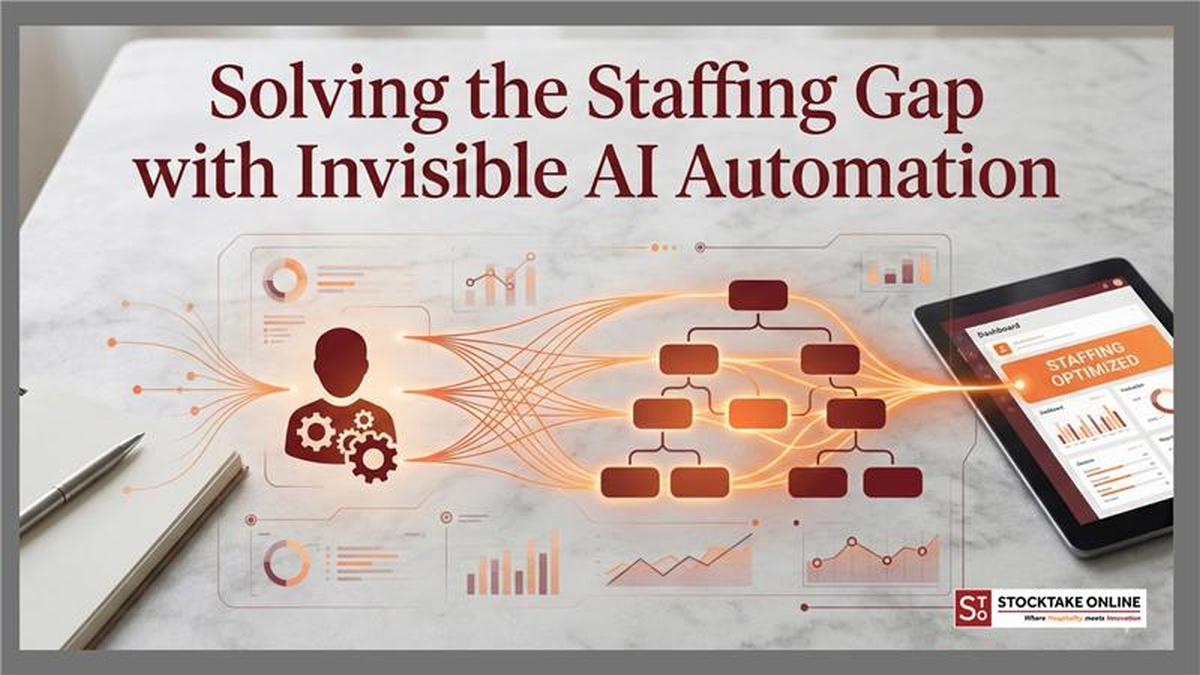
The hospitality industry faces a persistent staffing shortage, particularly in back-of-house (BOH) operations. Skilled chefs and managers are scarce, while administrative tasks continue to consume significant hours each week. This reduces operational efficiency, increases staff turnover, and drives up costs.
Invisible AI Automation is the solution. Stocktake Online automates repetitive inventory and procurement workflows, allowing your team to focus on what they do best: preparing exceptional food and managing operations efficiently.
Industry and Market Context
As we enter 2026, operators face dual pressures: the scarcity of skilled BOH talent and rising labour costs. Hiring additional staff to cover administrative gaps is no longer financially or logistically sustainable.
Macro-economic factors in the UK and Europe have tightened the labour market. Brexit, post-pandemic workforce shifts, and rising minimum wages have reduced the pool of experienced chefs and managers.
Staff utilisation is critical. A Head Chef or General Manager can spend 10–15 hours per week on administrative tasks such as:
- Manual invoice entry
- Updating recipe costs in spreadsheets
- Reconciling deliveries with orders
- Correcting stock discrepancies
Modern operations demand accuracy due to cloud kitchens, multi-location setups, and complex compliance requirements. Operators integrating technology as core infrastructure gain a competitive advantage.
Operational Challenges
Inefficient BOH processes exacerbate staffing gaps and increase costs. Key pain points include:
Manual Stocktaking: Weekly stock counts performed late at night by exhausted staff often involve guesswork, undermining inventory accuracy.
Invoice Processing Bottlenecks: Manual entry of delivery invoices can cause errors in pricing and quantities, affecting gross profit and reporting accuracy.
Variance Blindness: Without real-time integration between sales and inventory, discrepancies are detected too late. Missing stock or over-purchasing reduces margins and wastes resources.
Training Delays: High turnover forces new staff to learn manual systems, causing errors, wasted stock, and operational inefficiency during onboarding.
Financial Impact of Manual Processes
Failure to automate BOH workflows has a direct effect on profitability:
- Gross Profit Erosion: Errors in ordering and inventory management can cost thousands annually per site.
- Shadow Labour Costs: Four hours of admin work per week by a senior chef equals over £10,000 per year per site.
- Turnover Costs: Replacing a hospitality employee costs over £3,000 when factoring recruitment, training, and lost productivity.
- Forecasting Challenges: Manual data increases the risk of overstocking or running out of high-margin items during peak periods.
Modern Solution Framework
Operators need a solution that works for staff, not the other way around. A modern inventory ecosystem must include:
- Zero-Entry Procurement: Digitise supplier invoices through Optical Character Recognition (OCR) or direct EDI integration.
- Predictive Logic: AI suggests order quantities based on historical sales, upcoming reservations, and current stock.
- Mobile-First Workflows: Count, order, and transfer stock from handheld devices, online or offline.
- Real-Time Variance Analysis: POS integration compares theoretical usage to actual usage instantly.
- Supplier Integration: Purchase orders, deliveries, and credit notes are synced automatically to ensure accuracy.
How Stocktake Online Delivers Results
Stocktake Online removes administrative friction while keeping decision-making with your team.
Automated Invoice Digitisation: Capture a photo of an invoice or delivery note. The platform extracts data, updates stock, verifies prices, and syncs with accounting software. This saves 5–10 hours per week per site.
Smart Ordering and Par Levels: Dynamic par levels and consumption-based ordering reduce overstock, spoilage, and manual counting. Small teams can manage larger operations efficiently.
Seamless POS Integration: Real-time connection between sales and inventory ensures accurate stock tracking and variance reporting.
Mobile Flexibility: Multiple staff members can count stock simultaneously on their own devices. A four-hour stocktake can be reduced to 45 minutes. Cloud sync allows Head Office to monitor operations instantly.
By implementing these features, operators effectively "hire" a digital assistant that works continuously and with precise accuracy.
Region-Specific Insights for the UK and Europe
Operators face additional challenges due to strict allergen regulations, complex supply chains, and fluctuating energy costs. Invisible AI Automation ensures compliance, improves margin control, and reduces administrative workload. Every ingredient is accounted for, preventing waste and protecting profitability.
Industry Use Cases
Multi-Site Restaurant Chains: Centralise inventory, recipe, and pricing updates across 5–50+ locations. Head Office manages stock efficiently while site managers focus on service quality.
Hotel F&B Operations: Track internal transfers across breakfast, banqueting, room service, and bars digitally. Manual paperwork is eliminated.
Cloud Kitchens and QSRs: AI-driven forecasting ensures just-in-time replenishment, maximising space and reducing overstock in fast-paced, low-margin operations.
Best Practices for Maximum ROI
- Management by Exception: Flag only anomalies such as price or stock discrepancies for immediate action.
- Standardised Recipe Engineering: Accurate recipe cards enable automatic gross profit calculations and menu updates.
- Daily Critical Counting: Quick checks of key items reduce theft and spoilage.
- Supplier Workflow Integration: Digital orders and automated invoice matching save days of finance effort.
Operators typically see ROI within 180 days through reduced waste, improved gross profit, and administrative hours saved.
AI and Future Trends
Invisible AI will continue to evolve, providing:
- Autonomous Procurement: Automated ordering for staples, requiring human approval only for high-value items.
- Menu Engineering Intelligence: AI identifies which dishes to sell based on stock levels and costs.
- Waste Prediction: Machine learning predicts waste before it occurs, suggesting preemptive usage for fresh produce.
Stocktake Online integrates these advancements to keep operators at the forefront of operational efficiency.
FAQs
Will AI automation replace my kitchen staff?
No. It automates administrative tasks, allowing chefs and managers to focus on cooking and managing.
How long does it take to see ROI?
Most operators see ROI within 180 days through waste reduction, improved gross profit, and hours saved.
Can Stocktake Online handle multi-site transfers?
Yes. Transfers between locations and cost centres are fully digital with audit trails.
Is it difficult for non-tech-savvy staff?
No. The interface is intuitive, visual, and easy to use on smartphones.
Does it work offline?
Yes. Operations sync automatically once connectivity is restored.
How does it address the staffing shortage?
Automating 10–15 hours of admin work per week reduces the need for additional hires and prevents staff burnout.
Conclusion
The hospitality staffing gap will not disappear on its own. Operators who decouple operational capacity from headcount will thrive. Invisible AI Automation protects margins, reduces administrative workload, and allows staff to focus on core responsibilities.
Stocktake Online provides the infrastructure to make this transition seamless. Book a Demo today and discover how much time your team can save.
| About Stocktake Online Stocktake Online is a leading cloud-based restaurant and hospitality inventory management software trusted by thousands of businesses worldwide. With over a decade of industry expertise and a 4.7+ star customer rating, the platform empowers restaurants, hotels, bars, catering companies, and cloud kitchens to optimise ordering, control costs, reduce waste, and maintain accurate real-time stock visibility across single or multi-site operations. Learn more at www.stocktake-online.com |