



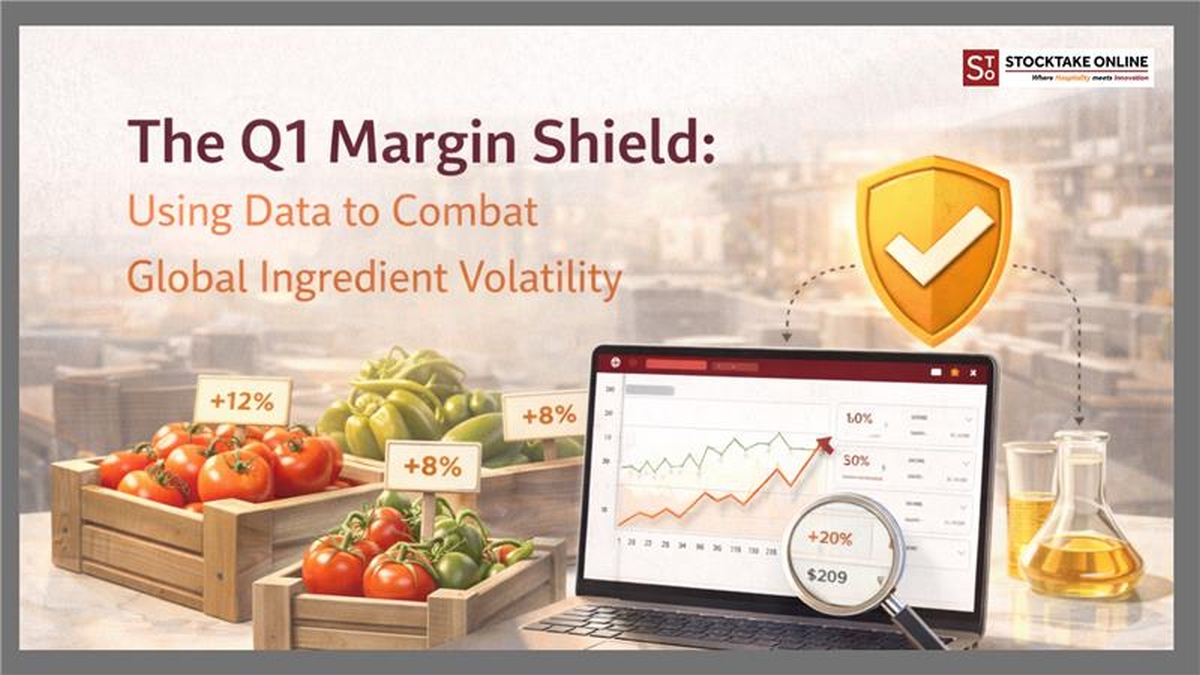
The North American hospitality sectorin 2026 is defined by a paradox of record-breaking demand and razor-thinmargins. For restaurant chains operating across the US and Canada, the complexity of managing inventory management at scale has reached acritical inflection point. Traditional manual processes are no longer merelyinefficient; they are financially dangerous. As inflation fluctuates and consumer preferences shift toward sustainable and locally sourced products, the ability to maintain precise control over Cost of Goods Sold (COGS) becomes the primary differentiator between profitable expansion and operational stagnation.
This article explores the five mostsignificant inventory hurdles facing modern chains, from the erosion of GrossProfit (GP) due to hidden waste to the logistical nightmares of multi-sitecross-border supply chains. By leveraging AI-driven forecasting and real-timedata synchronisation, operators can transition from reactive crisis management to proactive financial planning. Understanding these challenges is the firststep toward building a resilient, 2026-ready back-of-house (BOH) ecosystem.
Industry & Market Context
The macro-economic landscape for US and Canadian restaurant chains has undergone a fundamental shift. We are operating in an era where supply chain volatility is the "newnormal." In the US, the concentration of purchasing power allows for scale, yet regional price variations and state-specific labour laws create afragmented operational reality. In Canada, the added layers of inter-provincial trade complexities and a high reliance on imported produce during winter months exacerbate the risk of stockouts and price spikes.
Labour remains the most significant pressure point. With high turnover rates in the BOH, the time required to trainstaff on complex, manual stocktake procedures is a luxury few operators canafford. Furthermore, the rise of cloud kitchens and hybrid models(delivery-only brands operating out of existing brick-and-mortar sites) has doubled the complexity of inventory tracking. A single physical kitchen may nowbe managing inventory for three different virtual menus, necessitating a level of granular tracking that spreadsheets simply cannot provide.
Environmental, Social, and Governance(ESG) mandates are also moving from "optional" to"essential." Both US and Canadian regulators are increasingly scrutinising food waste, pushing chains to adopt more rigorous reporting standards. In this climate, inventory management is no longer just a kitchen task; it is a core financial and compliance function.
Operational Problems: The Reality of the BOH
Managing a multi-site chain introduces "the transparency gap." When an operation grows beyond three sites, the ability of a central F&B Director to oversee daily movements diminishes. This leads to several recurring operational failures:
The Variance Trap
The most common issueis the discrepancy between theoretical stock (what should be there based onsales) and actual stock (what is physically on the shelf). Without integrated Features like real-time POS polling, variances go unnoticed for weeks, by which time the "leakage"-be it through theft, over-portioning, or unrecorded waste-has already decimated the month's margins.
Manual Data Entry & "Fat-Finger" Errors
Many chains still rely on staff writing counts on clipboards and later entering them into a master spreadsheet.This dual-entry system is a breeding ground for errors. A misplaced decimal point on a high-value item like Wagyu beef or premium spirits can lead tomassive financial misreporting, triggering unnecessary audits or panicked over-ordering.
Static Par Levels
In a fast-moving market, static parlevels are a liability. A par level set in July is likely irrelevant by December. Chains that fail to adjust their ordering based on seasonal trends orlocal events find themselves burdened with dead stock or, conversely, losing revenue due to "86ed" menu items.
Financial Impact: The Erosion of the Bottom Line
The financial consequences of poor inventory control are cumulative and often hidden. Margin erosion typically happens in increments of 0.5% to 1%, which may seem negligible per site but represents millions in lost EBITDA for a 50-unit chain.
- GP Decline: When COGS are not tightly managed, the Gross Profit margin is the first casualty. Inconsistent recipe adherence and unmonitored waste directly inflate the cost of every plate served.
- Cash Flow Pressure: Excess inventory is essentially cash sitting on a shelf that can not be used for payroll, marketing, or expansion. For Canadian operators dealing with fluctuating exchange rates, holding too much imported stock can lead to significant "currency-blind" losses.
- Inaccurate Forecasting: Without historical data, purchasing heads are "buying in thedark." This leads to emergency local sourcing at retail prices when the primary supplier cannot fulfill an order, further squeezing the margins.
To understand how to stabilise these costs, many operators look toward Pricing models for software that offers a clear Return on Investment (ROI) throughwaste reduction.
Modern Solution Framework: 2026 Ready
A 2026-ready inventory system mustmove beyond being a digital ledger. It must function as an intelligent operational assistant. The core pillars of this framework include:
- Real-Time Data Synchronisation: Seamless Integrations with POS systems and accounting software to ensure that every sale instantly decrements stock levels.
- AI-Driven Forecasting: Using machine learning to analyse historical sales, local weather patterns, and even regional events to suggest precise order quantities.
- Mobile-First Counting: Empowering BOH staff with mobile apps that allow for "shelf-to-sheet" counting and instant barcode scanning, reducing the time spent on stocktakes by up to 50%.
- Invoice Digitisation: Utilising OCR (Optical Character Recognition) technology to scan supplier invoices, automatically updating unit prices and identifying price creeps the moment they happen.
- Automated Supplier Workflows: Digital purchase orders that go directly to the supplier, ensuring there is a digital paper trail from the moment an order is placed to the moment it is reconciled in the kitchen.
How Stocktake Online Delivers These Capabilities
Stocktake Online (STO) is engineered specifically to address the nuances of multi-site management. Unlike generic inventory tools, STO understands the hospitality DNA. Our platform provides a centralised "command centre" for COOs and F&B Directors tomonitor performance across the entire estate.
- Enterprise Visibility: From the Homepage, users can access high-level dashboards that highlight which sites have the highest variance, allowing for targeted interventions rather than blanket "check-ins".
- Recipe Costing and MenuEngineering: STO allows for granular recipe breakdowns. If the price of chicken breasts rises in Ontario, the system automatically recalculates the margin on every dish containing that ingredient across your Canadian sites.
- Seamless Onboarding: Through our Services, we provide professional implementation and data migration, ensuring that the transition from manual systems to digital mastery is frictionless for your site managers.
- Global Support with LocalNuance: Whether you are managing a steakhouse inTexas or a seafood chain in British Columbia, our software handles multiple currencies, tax structures, and units of measure effortlessly.
For more information on our mission and the team behind the tech, visit our About page.
Industry Use Cases
The Multi-Unit Franchise
A franchise owner with 15 QSR locations used STO to standardise ordering across all sites. By implementing "forced" digital stocktakes every Sunday night, they identified a 4% variance in poultry usage caused by inconsistent portioning. Correcting this across all 15 sites resulted in an annual saving of over $120,000.
The High-End Hotel Group
Large hotel F&B operations dealwith massive volumes and diverse outlets (bars, banqueting, fine dining). Byusing STO’s multi-outlet tracking, a major hotel chain was able to separate their banquet inventory from their daily restaurant stock, eliminating the "missing stock" confusion that usually occurs during large events.
The Rapidly Expanding Cloud Kitchen
A US-based cloud kitchen brand used STO’s Integrations to manage 5 different virtual brands from a single inventory pool. The system’s ability to map a single ingredient (e.g., flour) to multiple recipes across different brands allowed them to maintain a 98% accuracy rate in their stock levels.
Best Practices & Action Frameworks
To master inventory management, chains should adopt the following "Gold Standard" workflows:
The "Shelf-to-Sheet" Protocol
Organise your physical store room to mirror your digital inventory list. This reduces the time staff spend hunting for items and ensures nothing is missed during a count.
Weekly Variance Analysis
Do not wait for the end of the month. Conduct a "Top 10" count every week-focusing on your ten most expensive or high-volume items. This allows you to catch and fix issues beforethey become month-end disasters.
Strict Waste Tracking
Every item that goes into the bin must be recorded. Is it spoilage? Is it a kitchen error? Or is it a "combed" item (returned by a guest)? STO’s waste tracking module categorises these losses, providing the data needed to retrain staff or negotiate better terms with suppliers.
Supplier Performance Audits
Use your data to hold suppliers accountable. If a supplier is consistently delivering short or providing produce that spoils 2 days early, your inventory system should provide the evidence needed for a difficult conversation or a change in vendors.
AI & Future Trends (2026-2027)
The future of inventory is autonomous. We are moving toward "Invisible Inventory," where IoT-enabled scalesand cameras in refrigerators will track stock levels without human intervention. AI will not just suggest an order; it will execute it based on apre-approved budget and the best available market price.
Furthermore, ML forecasting will become hyper-local. Imagine a system that sees a 10,000-person concert has been announced near your Chicago site and automatically increases your beverage and "grab-and-go" prep levels for that specific weekend. This is thelevel of precision Stocktake Online is moving toward.
FAQs
1. How long does it take toimplement a new inventory system across 20+ sites?
With professional assistance from our Services team, a full enterprise rollout typically takes 4–8 weeks, including data setup and staff training.
2. Can Stocktake Online integratewith my existing POS?
Yes, we offer extensive Integrations with the world’s leading POS systems to ensure real-time data flow.
3. Does the software work for bothfood and beverage?
Absolutely. STO is designed forthe complexities of both, including tracking liquid volumes and spirit yieldsin high-volume bars.
4. How does the system handle"catch weight" items common in the US and Canada?
Our system allows for items to be purchased by weight but used bythe piece (or vice versa), ensuring total accuracy for proteins and produce.
5. Is the software cloud-based?
Yes, STO is a fully cloud-based SaaS platform, allowing COOs tomonitor their entire estate from any device, anywhere in the world.
6. Can I manage multiple suppliersin one dashboard?
Yes, you can manage hundreds oflocal and national suppliers, with specific price lists assigned to each site.
7. How does the software help withfood waste?
Through a dedicated waste module that tracks the 'why' behind every lost gram of stock, turning waste into actionable data.
8. Is there a mobile app for stockcounting?
Yes, our mobile functionality is designed for fast, offline-capable counting in walk-ins and basements.
Conclusion
Navigating the inventory challenges ofthe North American market requires more than just discipline; it requires theright digital partner. By moving away from fragmented, manual processes and embracing a unified, data-driven approach, US and Canadian chains can protect their margins and focus on what they do best: delivering exceptional guestexperiences.
The financial clarity provided by professional inventory management is the foundation of a scalable hospitality business. Are you ready to eliminate the variance and take control of your COGS?
Explore our Features today or Contact our team to book a bespoke demo for your chain.

| About Stocktake Online Stocktake Online is a leading cloud-based restaurant and hospitality inventory management software trusted by thousands of businesses worldwide. With over a decade of industry expertise and a 4.7+ star customer rating, the platform empowers restaurants, hotels, bars, catering companies, and cloud kitchens to optimise ordering, control costs, reduce waste, and maintain accurate real-time stock visibility across single or multi-site operations. Learn more at www.stocktake-online.com |