


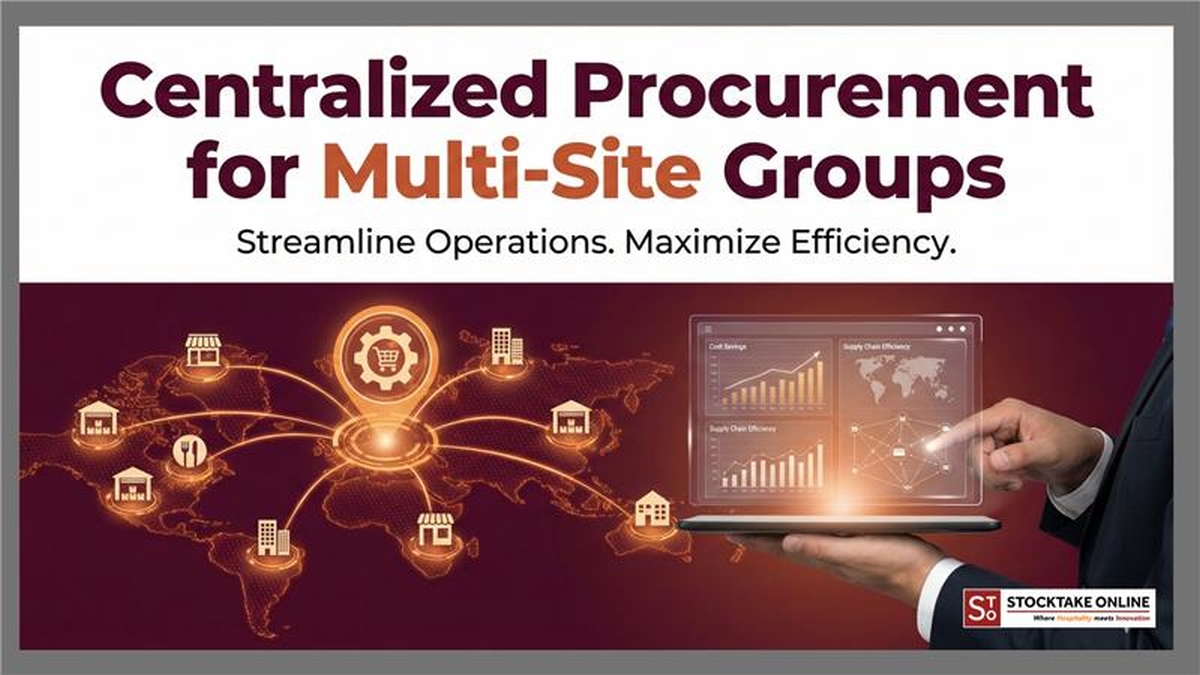
For restaurant groups operating across the GCC, the transition from a single successful unit to a multi-site operation introduces a specific set of financial risks. Chief among these is the dilution of procurement power and the loss of stock visibility. Centralised inventory management for restaurants is the operational framework that allows head office and finance teams to consolidate purchasing, standardise recipes, and monitor real-time stock movement across diverse locations from a single point of truth. By moving away from site-level silos, groups can protect margins against rising global commodity prices and regional supply chain fluctuations.
The Complexity of Multi-Site Operations in the GCC
Scaling a hospitality brand in markets like Dubai, Riyadh, or Doha brings unique logistical challenges. When each location manages its own ordering and stock counting, the business loses the ability to leverage economies of scale. Finance teams often find themselves reconciling disparate invoices and struggling to identify why one site maintains a 28 percent food cost while another sits at 34 percent with the same menu.
The lack of a unified system leads to "dark patches" in the P&L. Without centralised oversight, stock variance goes unnoticed, and waste becomes an accepted cost of business rather than a metric to be managed. StockTake Online is designed to solve these exact issues, helping multi-unit operators and independent restaurants maximize their profits.
Defining Centralised Inventory Management
Centralised inventory management for restaurants is a strategic approach where all procurement, stock tracking, and recipe costing functions are managed through a single, unified digital platform. This system connects every branch, commissary kitchen, and warehouse to a central database. It ensures that every ingredient purchased and every dish sold is recorded in real time, providing the executive team with the data needed to make informed purchasing decisions and maintain consistent margins across the entire group.
Why Localised Procurement Fails the Modern Group
In the early days of an operation, allowing a chef or manager to order directly from preferred suppliers feels efficient. However, as the group expands, this decentralized model begins to erode profitability:
-
Fragmented Purchasing Power: Buying small quantities across ten different sites is more expensive than a single, negotiated group contract.
-
Recipe Drift: Without a central system to enforce standard yields and portion sizes, the cost of a dish can vary significantly between locations.
-
Inventory Bloat: Individual sites often over-order to create a "safety net," tying up cash flow in sitting stock that eventually expires or goes missing.
To understand the health of the business, many operators start by reviewing core features to see where the data gaps exist.
The Strategic Shift to Centralised Control
Implementing a centralised framework is not about removing autonomy from site managers; it is about providing them with better tools while protecting the company's bottom line.
Unified Supplier Management
Centralisation allows the finance department to lock in prices with approved vendors. When a site manager places an order, they select from a pre-approved catalogue with set pricing. This eliminates "rogue spending" and ensures the inventory and stock control system reflects actual negotiated rates, making invoice reconciliation a matter of minutes rather than days.
Real-Time Inter-Branch Transfers
In a multi-site GCC environment, one location might be overstocked on high-value items like wagyu or saffron while another faces a shortage. A centralised system allows for seamless inter-branch transfers. This reduces the need for emergency, high-cost local purchases and ensures that stock is utilised where it is needed most before it reaches its expiry date.
Financial Clarity and COGS Accuracy
For the finance director, the primary benefit of centralisation is the accuracy of the Cost of Goods Sold (COGS). When inventory data is siloed, COGS is often a "best guess" until the end-of-month physical count.
By integrating your inventory platform with your Point of Sale (POS) and accounting software via partner integrations, you achieve a theoretical versus actual stock analysis. You can see exactly where the variance lies, whether it is due to theft, waste, or unrecorded consumption.
The Operational Impact of AI Invoice Scanning
Modern centralized systems now utilize AI invoice scanning to eliminate manual data entry errors. Whether you take a picture or upload a file, the system reads item names, quantities, and prices automatically. This ensures inventory levels are updated instantly based on latest deliveries, and alerts you to unexplained price increases before they affect your cost management.
Standardising Recipes Across the Enterprise
Consistency is the hallmark of a successful large chain. Our enterprise feature enables recipe templating, allowing a particular recipe to be linked to different locations without the user having to create it individually. This ensures that whether a customer dines in Dubai or Riyadh, the portion sizes, ingredients, and costs remain identical.
Monitoring Recipe Performance
With a centralised recipe management system, you can review past purchases to know exactly how much you require for peak times. This prevents the mismanagement of ingredients which leads to spoilage and waste. It also allows you to set selling prices according to expected GP percentages, ensuring every menu item contributes to the bottom line.
Leveraging Data for Better Decision Making
StockTake Online’s reporting module provides a bird’s eye view of the entire operation. Management can access data about products separately for a more detailed understanding of category and period performance.
Real-Time Consumption Tracking
The live consumption report shows real-time analytics on the stock position, facilitating procurement to plan orders more effectively. This depth of insight is crucial for maintaining a healthy profit margin and ensuring ingredients are always available when needed most during rush hours.
Practical Scenario: Regional Expansion
Consider a restaurant group expanding across the GCC. By using a centralised system, the head office can monitor the stock levels of new locations from a remote location in just one place. They can spot if a specific branch is using significantly more ingredients than sales data suggests they should be, allowing for immediate training or operational adjustments.
Moving Toward Operational Excellence
The GCC hospitality market is becoming increasingly competitive. As overheads rise, the difference between a profitable group and one that is struggling often comes down to how tightly they control their inventory. Moving to a centralised model is no longer a luxury; it is a necessity for any group serious about scaling.
Beyond the software, value-added services like STO Assist provide dedicated consultants to help build growth strategies, optimise SOPs, and identify cost leakages. This holistic approach ensures every moving piece of your business—from kitchen operations to front-of-house service—works like a finely tuned machine.
If you are reviewing how to unify your procurement or seeking better visibility across your locations, it may be worth seeing how StockTake Online approaches these challenges in practice. Our team understands the nuances of multi-site hospitality and can help you transition from fragmented data to operational clarity.
| About Stocktake Online Stocktake Online is a leading cloud-based restaurant and hospitality inventory management software trusted by thousands of businesses worldwide. With over a decade of industry expertise and a 4.7+ star customer rating, the platform empowers restaurants, hotels, bars, catering companies, and cloud kitchens to optimise ordering, control costs, reduce waste, and maintain accurate real-time stock visibility across single or multi-site operations. Learn more at www.stocktake-online.com |